Related

How To Be An Effective Leader
It's 5:20am on Thursday morning, I can't sleep, my 5yo daughter decided she wants to snuggle Daddy at about 2 o'clock this morning, and by snuggle she means roll around and kick me. When it's pitch black dark and you are lying awake a lot goes through your mind. This morning I got on a rabbit hole about what it means to be a leader. Not just a "leader," but an Effective Leader.
I've been honored the privilege for the past 10+ years to mentor and grow other coaches, teachers, and athletes. Through that, along the way, I was able to refine and development my leadership and create a guide to evaluate my effectiveness as a leader. I'd like to share that guide with you. Buckle up, it's a long ride.
Leadership is broken down into 6 categories and before I share them with you I want you to do two things;
#1 Realize every leadership opportunity has 3 levels of understanding: What? Why? How? What is it I need you to know. Why is it important. How is it accomplished. One of the first things I help mentees understand is the difference between being a good leader and being excellent. A "good" leader can likely help you understand what to do. The classic example of this is the accomplished athlete that decides to become a coach. This individual can tell you what to do, probably can do it beautifully, but has no idea why or how it's actually done. I tell coaches all the time, you DO NOT have to be the best athlete to be a great coach. A "better" leader can tell you and show you what to do, but can also explain to you why. There's a deeper level of understanding required to communicate why. A good example of this is a fitness coach telling an athlete to sit back in their heels on a squat and understanding the concept of posterior chain engagement and how it can relate to safety and efficacy of the movement. But even this coach may not know how to fix the error. That leads me to the most effective leaders and their ability to communicate how it's done. This leader has such a deep understanding of what he/she is looking at that they can easily find the root cause of what's maybe inefficient about the movement and help the student correct it. We will dive deeper into "how" as we go, but a simple example here teaching a child how to read. Every one of you do this, whenever your child is learning to read you help them sound out the words. You break them down into smaller chucks. You emphasize certain letter sounds. An excellent leader can do that for everyone they are leading and has a depth of knowledge so deep about the industry or topic they lead that they make it seems so simple and you don't even realize it's happening.
#2 Forget about what's "right or wrong" and begin to think "more or less effective." There are so many different strategies to complete a task. If I'm traveling from Alabama to Arizona I can certainly find a way through Montana and will eventually get there or I can just hit I-10 and go the most direct route. One way will always be more effective than another.
1: Teaching
Teaching can be very simple if we understand what teaching is. Teaching is just taking a body of knowledge and communicating it to a population. That means teaching has two parts; an internal process and an external application. The internal process is your knowledge. It's everything you know about the topic you're teaching. The external application is communication. Communication is the absolutely key to being an effective leader. There is an old saying that goes something like "knowledge is power." But knowledge is only as powerful as the ability to share it, otherwise it's useless. Hang that on your fridge! Communication is about connection. We have a simple process in the fitness world for how to most effectively teach that applies to any leadership in life. It goes like this; Tell-Show-Do-Check. First I'm going to tell you what I want you to do. Then I'm going to show you what I want it to look like. Then I'm going to have you do it, while I check (watch). Here's an example; "I'm going to teach you how to throw a baseball, but before we worry about the actual throw, I want you to stand sideways to your target with your feet about shoulder width apart. Look at my feet (visual representation), now you try." During this time I'm watching for the individual to set their feet in the appropriate position. Notice how in this scenario I didn't just jump right to the whole deal (throwing a baseball). I broke it down into one simple step at a time. A common pitfall I see a lot of leaders fall into is 1) expecting the audience already knows as much as they do and 2) trying to teach everything at once. Teaching doesn't mean we have to prove our knowledge by cramming a dissertation about throwing mechanics down someone's throat, it's learning to create the product through step by step instructions at the appropriate rate for the audience in front of you.
2: Learning
Yup! You have to learn. There's two ways we can learn from our audience.
1) Observation: become the student. Watch. Learn what makes your mentees thrive, what shuts them down. Know when to lean in and when to pull back. You can only do this by observation. Especially for those in a group setting, it is so important to understand how to communication with different personalities in the same room or on the same field. Take time to see and listen to your students.
2) Ask, Don't Tell: This is such an underutilized tactic that can really create space for excelled development of your students. When they make a mistake (or do something different than how you would do it) don't just tell them the "right" way. Ask them why they made the choice they did. I'll give you an example of this. Last year my son's baseball team was a playing in the state tournament and we were in a nail biter game. I realize I have a lot of baseball references, that's just our life in the Jordan home, we love baseball! Jax was playing pitcher. One thing I always tell Jax is to know the scenario on the field before the pitch, so he scans the field. Runners on first and third and I don't think they had any outs. The ball gets hit and it's a slow roller to the pitcher. Jax, without missing a beat, scoops up the ball and fires it to the catcher. In all the excitement he over threw the catcher and the ball rolled to the backstop. Runner scores and batter ended up with a double. Now time out, all you baseball gurus right now are shaking your head and cussing Jax under your breath and that's exactly what his coach did also, screaming "NO Jax! Throw the ball to first and get the out." *Remember we're not looking for right and wrong we're looking for more or less effective. Jax was upset, but never got an opportunity to learn from that moment, so after the inning I asked him very calmly "hey bud, what did you see out there to make the choice you did?" He immediately replied "The ball rolled towards 3rd base side, I didn't think I could make the throw fast enough back towards first to get the out and I seen the runner going home, so I thought that was my best chance to get an out and save a run." To which, because I was stunned at the confidence in his answer, I replied "Nice call, dude! That's high level thinking." Now I'm not an expert in baseball, but that is some quick thinking for an 8yo in a pressure situation. That's a win in my book. We lost the game by the way. You see, giving your students an opportunity to explain their decision only leads to development of critical thinking. The students that are only getting told what to do all the time are becoming dependent on that source. They are never getting an opportunity to even think for themselves and will eventually plateau in their success because they have to rely on someone's instructions before making a decision.
3: Redirection
This can also be written as correction, but every correction is just a redirection. If we wrap our minds around redirection instead of correction it subconsciously becomes a more positive interaction. There's 3 main forms of redirection.
Verbal: A verbal redirection is just simply speaking a command. Tone, body language, and volume play major roles in your verbal communication. As a matter of fact body language alone is responsible for 83% of how your communication is received. This is why it's so difficult to have a meaningful conversation via email, phone call or text message. Case in point there is a big difference in dropping your head and whimpering "I'm sorry" in a muttered voice and looking someone straight in the eye and speaking with empathy and confidence "I am so sorry." Those two things say the same thing, but represent very different attitudes. Verbal redirection is the fastest and most direct form of communication, but as Proverbs 18:21 says "the tongue has the power of life or death..." Different personalities will respond differently, which is why it is so important that you refer back to step 2 and learn your audience and how to most effectively communicate with each individual. Some of your audience may respond well to raising your voice and speaking direct and clear, but some may respond better to one on one private communication. This is especially important to understand when leading a group of young men vs a group of young ladies, more on that another time. But again, not right or wrong, but what's most effective. More often than not a verbal command can be best received in a concise, actionable cue. Concise just means short and direct. Actionable is simply giving a body part a direction. For instance if you're pressing a barbell over your head and you're losing midline stabilization and compromising the integrity of your spine (leaning back and not keeping your abs engaged) my cue can simply be "pull your ribs down!" It's concise-4 words. It's actionable-what body part? ribs. What direction? down. And it's understandable.
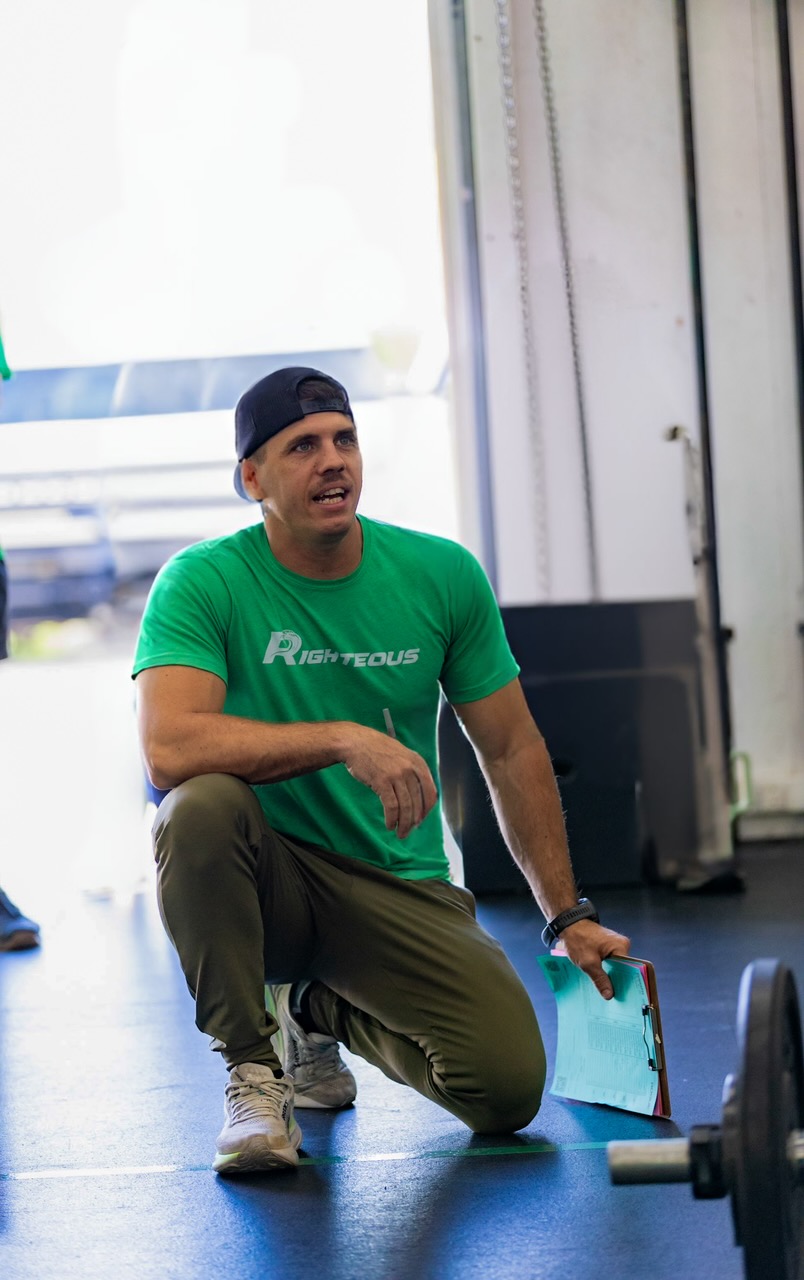
Visual: This is like show and tell. A lot of times a really effective measure here is to demonstrate how they look, then provide a contrasting image for how you want them to look. I'll do my best to put this in words to paint a picture. In my gym, once the workout is going, the music is cranked up, people are breathing heavy and likely at some point don't even know how to count let alone what their movement looks like. If I see someone squatting down and their knees are caving in towards one another I might run over in front of them and say "hey, your knees look like this" (showing my knees caving in during a squat and pointing to where I want them to look), "I need you to do this" (push my knees apart demonstrating safe and sound mechanics). Just be sure if you choose to use a visual redirection you are very clear with what you want them to see.
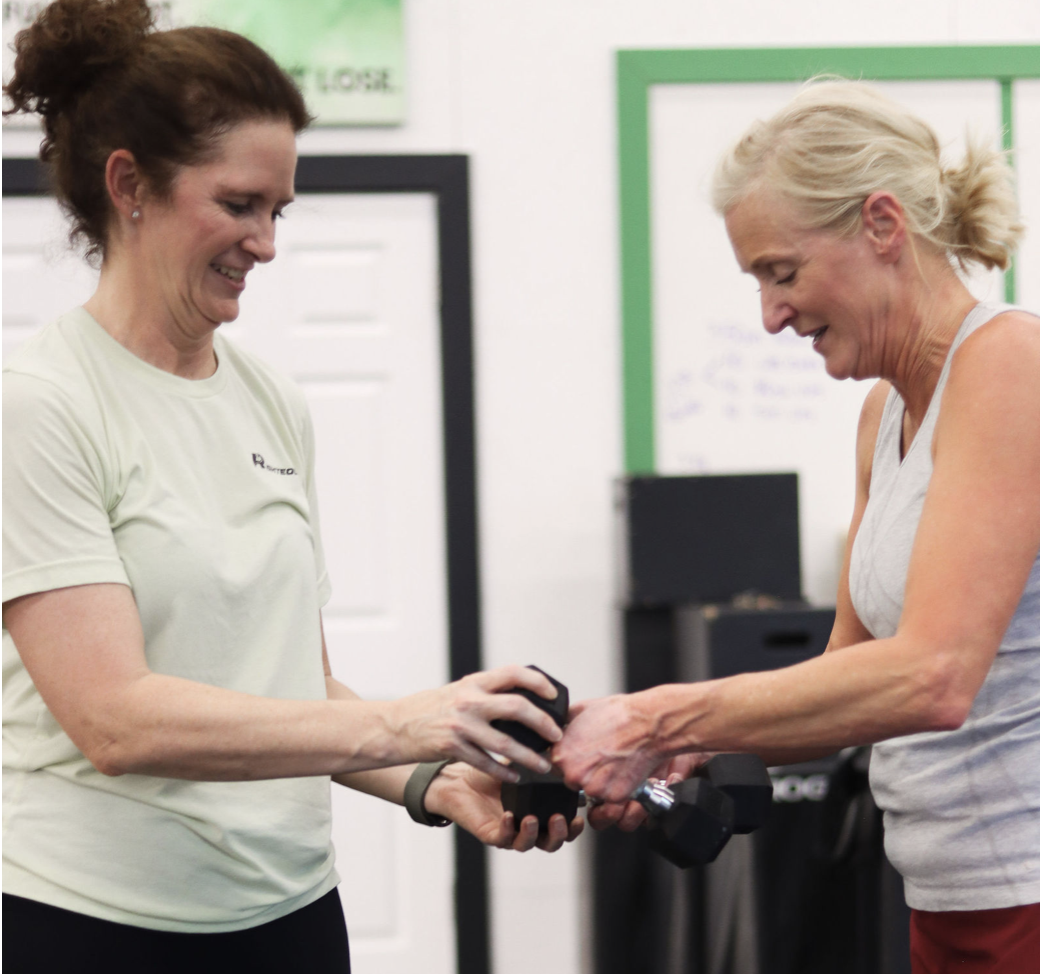
Tactile: This is a providing physical assistance. This is where you become most invasive, so again build trust first. In this case we can use the example of teaching a child how to write their name. At first they are coloring with crayons and have some death grip on the crayon like it's going to run away. When it's time to begin writing there's a more effective technique for how to hold a pencil. Telling them may not work well. Giving a visual may cause more confusion. So now we place their fingers on the pencil; thumbs goes here, pointer finger like this, etc. And the first few time we likely hold onto their hand and draw letters with them. Eventually they are picking up the pencil by themselves, holding it correctly and mimicking exactly what we did with them all on their own.
Regardless of the tactic you use for redirection the key to being successful is learning a balance between relentlessness and acknowledgement of improvement. To quote the legendary Mr. Vince Lombardi "Perfection is not attainable, but in the pursuit of perfect we may catch excellence." I have another quote for you to chew on...Don't let your expectation of "perfection" become the enemy of someone's "better."
4: Group Management
When thinking about managing a group there is a lot of pre-work that needs to be done to help increase your effectiveness. First we need to have a plan! Before we even enter the dance floor we need to have a well thought out plan. Could you imagine going to the hospital for a simple surgery on your hand and the doctor coming in and being like "I didn't have time to look over your file, but it's my understanding we're doing a foot amputation today. The anesthesiologist will be in shortly to knock you out and we'll get started." Um...wait. what? Have a plan. Be prepared. The most effective leaders are so effective because they have prepared relentlessly before they even see you. By the time you get the information they have rehearsed it a dozen times already, so by this point it's just repetition. The other skill effective leaders have are great organization plans. This comes with the preparation above. They have thought through the layout of the room or the position of each athlete to maximize their potential. Teachers in a classroom have to face this all the time. When best friends little Johnny and T-time Tyron get the same biology class the teacher sits Johnny on the left side and T-time in the principals office to keep them from causing havoc. Just kidding, but kind of. Know who in front of you can thrive together and who can't even survive together is important for everyone's learning. I hated assigned seats growing up, but I get it. I would always choose the back of the room because I was too cool for school. It didn't take long for every teacher I had to sit my tail right up front and center. One so they could do their job and not have to worry about me just walking out the door, but also because they wanted me in an environment I could learn in. I had to pay attention in the front row otherwise Mrs. Holland would kick my feet under the desk when she walked by or worse yet call on me to answer a question in front of the whole class. Bottom line here; fail to plan and you've planned to fail.
5: Presense & Attitude
I could write an entire blog or teach an entire course right here, but this one's already getting long, so I'll keep it short...ish. There is a lot here, but I'm going to give you my top 3 recommendations:
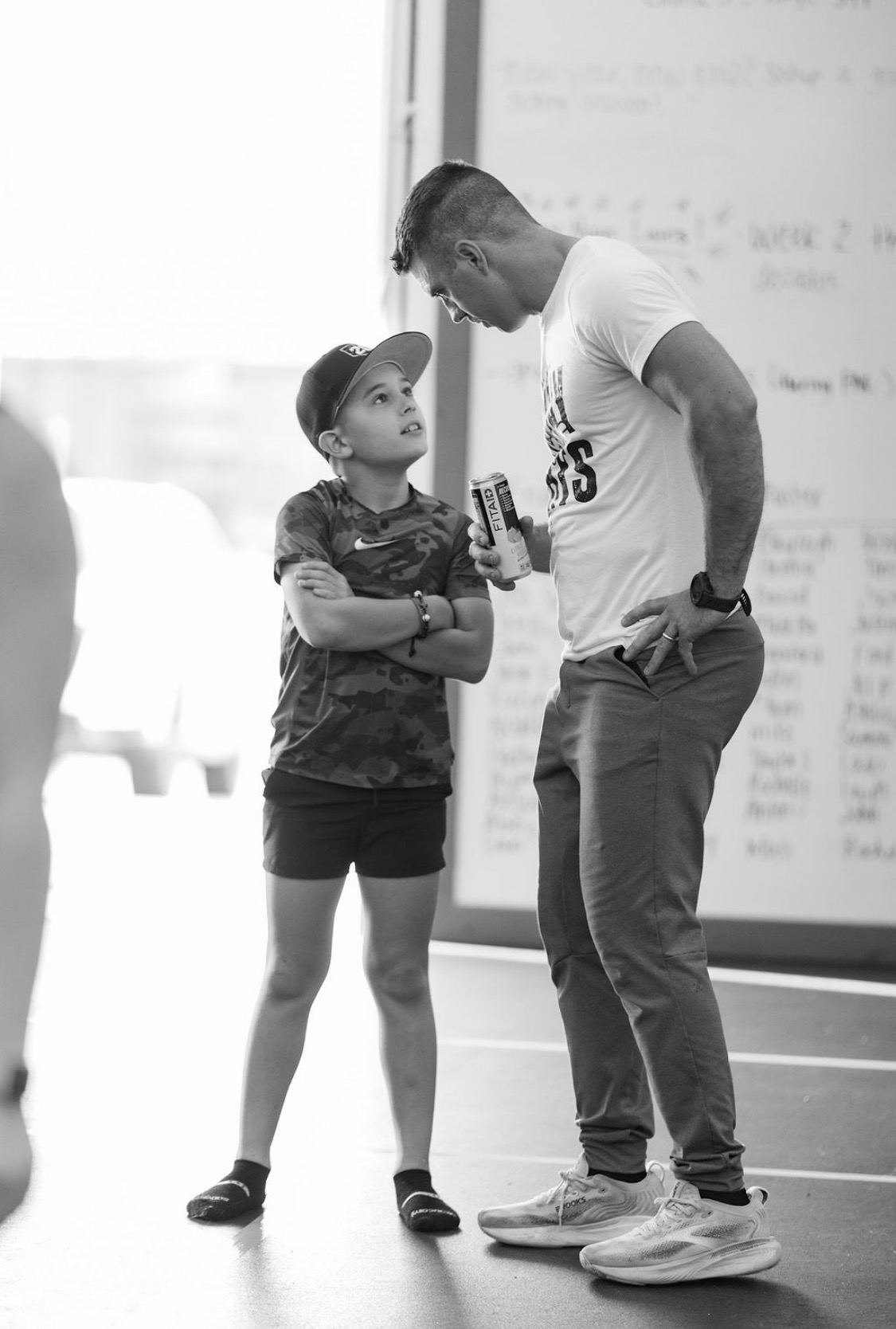
#1 Care: If you are in a leadership position or wish to be one day, care. Care about the people in front of you not just the information you're giving them. These are real humans with real stories. Get to know who they are. I don't remember much from Spanish class in high school, but I do remember Mrs. Hospie looking me straight in my eyes with her finger pointed at my face telling me, "I believe in you Jared. You're so much better than this." I would run through a brick wall for that lady. She showed me she cared about me. Coaches, you want your athletes to win for you, make sure they know you're their number one fan. Make sure they know they can count on you. Make sure they know you've got their back and there is nothing they can do to make you feel any different. I told my son Jax the other day after a tough practice, "Jax, I love you. I love you and there is no home run or strike out that can change that. There is nothing you can do to change my mind." Just (insert inappropriate word for dramatic effect) CARE! How do we do that? I'm glad you asked. Think of someone like a bank account. Before you can make a withdrawal from a bank account you must first deposit money. That on a human is called the emotional bank account. Before you earn the right to make a withdrawal you must make deposits. Build your audience up. Celebrate what they're doing well. Use the compliment sandwich; give a compliment, insert redirection, give another compliment. Something like this "coach you're doing such a good job with teaching these kids technique! It really shows you know what you're doing. Now, if you celebrate more of their effort and willingness to try. Man, you'll have these young men eating out of the palm of your hand!" I gave a compliment "you are doing a good job, you know what you're doing," then I strategically placed the criticism "celebrate their effort more," and finished with a positive future vision "they'll be eating out of your hand." It's hard to argue with that tactic. You're building trust. You're speaking life. You're winning.
#2 Empathy: Meet your audience where they are. John Maxwell has a great book on this called The 5 Levels of Leadership. In every interaction you begin as a level 1 leader, Positional Leadership. You get authority because you've been placed in a position. People listen to you because they have to. As your relationships grow you because a Permission Leader. People now listen to you because they want to, they trust you. You can then progress to a Production Leader. This is based on what you have done for the organization. You've shown results. Step number 4 is People Development. Folks follow you because of what you have done for them personally. The top tier of this pyramid is becoming a Pinnacle Leader. People are now seeking you out for who you are and the quality you have. The most fun part of all of this is you are at different stages with every relationship you have, so it's important to meet every individual where they are and know what stage your relationship is at.
#3 Passion: Remember your why! You Started this journey for a reason. Never forget that. The best compliment I think a leader can get is someone in their audience saying "I want to do what you do one day." I was at a marriage conference this past weekend and Paster Ted Cunningham said "I want a marriage that is repeatable. One I can be proud to see my kids live out." Isn't that so true?! Teachers create an environment that is repeatable. Coaches be a role model that is repeatable. Business leaders be a boss that people aspire to become. At the end of the day, I just want to be repeatable. Someone I'd be proud to see my son become and my daughter marry. That's why knowledge isn't power unless you communicate it to be passed along. Never forget why you started in the first place.
6: Leadership
A very wise Priest once told me "Jared, you're going to be a great leader one day. Always remember this. There are 3 positions of leadership. You will lead from the front. You will lead from the middle. And you will lead from behind. The key to becoming effective is knowing when to pull, when to push, and when to stand shoulder to shoulder." Mr. Joe, I have built my career on these words. Thank you.
Leading from the front means you are setting the expectation. You have created a firm foundation to stand on.. This is the "I'll show you the way" mentality. This is God's call to Moses and the Israelites. The parting of the Red Sea. "Let's Go! I have made a way."
Leading from the middle is where we become the example. Show that you care by stepping into battle with your students. I seen my son's baseball coach do this a few weeks ago. Jax got hit with a pitch and became a bit afraid to step back up, so the coach stepped up and the first pitch hit him right square in the arm. He built trust by showing that he was willing to take the same risk he's asking Jax to. This is the "we're in this together" attitude. When it was time for Joshua to step up and lead the Israelites God sent this message, "Have I not commanded you? Be strong and courageous. Do not be afraid; do not be discouraged, for the Lord your God will be with you wherever you go.” (Joshua 1:9)
Finally leading from behind. This is where we, as leaders, have a lot of power. This may seem like it's the place to dive in, drive it home, push to the finish, but it's really the place to empower and encourage your audience. It's the "I've got your back" trust fall type position. Have you invested enough into your audience that they can trust you? That they know they can take risks and make mistakes and it can't change how you feel about them? Knowing that your love for them is not based on performance, but is unconditional. God shows us an example of this every single day. We fall short of glory time and time again and still God shows us grace. God shares mercy on us.
If you made it this far, thank you. I know this is a long one and it's packed with information. Do me a favor, if you think this is something worth sharing please do. But even more importantly, use it for your own growth and development.
Much Love,
Jared